Cactus & Succulents
Drought-tolerant exotic succulents and desert varieties
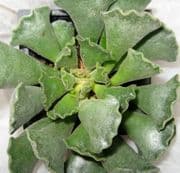
Adromischus cristasus Key Lime Pie
Also known as the crinkle-leaf plant, this is a slow growing plant, native to South Africa. It grows reddish brown aerial roots, and blooms white and pink flowers in the spring. Provide full sun, well drained soil, and water occasionally. Hardy to 25°F.
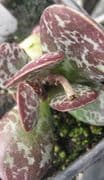
Adromischus trigynus
Also known as Calico Hearts, this succulent has green circular leaves decorated with reddish/purple splotches. Native to South Africa. Be careful not to over water.
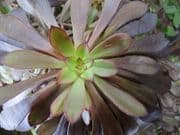
Aeonium domesticum 'Black Rose'
To develop its dark color, black rose, needs full sun, but will still grow well in partial sun. In the winter it blooms yellow flowers. Hardy to zone 9.
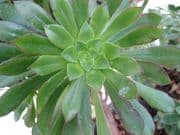
Aeonium domesticum 'Green Lady'
Native to the Canary Islands, this aeonium can grow to small tree height. It grows well under full sun and is hardy to zone 9.
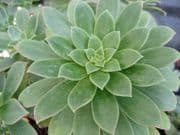
Aeonium domesticum 'grey green'
This drought tolerant succulent forms big rosettes. Yellow flowers bloom in the summer. Hardy to zone 9.
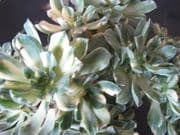
Aeonium domesticum variegata
Aeonium domesticum variegata forms freely branching rosettes. Clusters of yellow star shaped flowers. Provide bright light and porous soil. Hardy to 32F. Native to the Canary Islands.
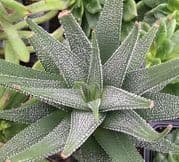
Aloe aristata
This Aloe succulent is unique in our collection of Aloes because of its sandpaper like texture. Colored dark green with white bumps throughout the plants. Like all succulents be careful not to over water.
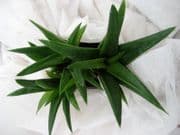
Aloe black gem
The green leaves of this aloe, left under the sun,change to a near black. It blooms orange-red flowers in the spring. Water sparingly. Hardy to 25°F.
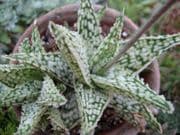
Aloe Diego
This Aloe plant is a brighter green than the rest with larger splotches throughout the leaves. Same as all succulents, be careful not to over water.
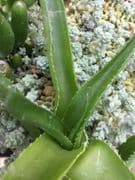
Aloe gaster Pearl
This Aloe grows from a fast growing stem, has plain green leaves. As for all succulents, be careful not to over water.
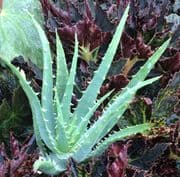
Aloe humilis
Also known as Hedgehog aloe, this aloe has thorn looking texture on the leaves. Blooms beautiful orange flowers usually in late winter-spring times. Like all succulents be careful not to over water.
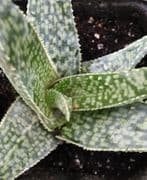
Aloe hybrid Green
This Aloe is dark green with white/grey splotches throughout the leaves. Like all succulents be careful not to over water.
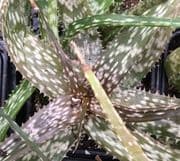
Aloe hybrid Red
This hybrid of the succulent aloe has green leaves and leaves tinted red, all with splotches of white/grey throughout them. Same as all succulents, be careful not to over water.
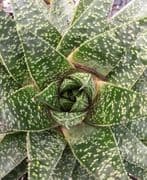
Aloe hybrid variegated
This Aloe succulent is variegated white and green. The leaves are flatter than most aloes. Same as all succulents be careful not to over water. Most similar to the Aloe aristata out of the other aloes.
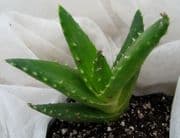
Aloe nobilis gold tooth
Aloe Nobilis forms small clusters and blooms reddish-orange flowers in the summer. Provide full sun to light shade. It is very drought resistant and hardy to 20°F.
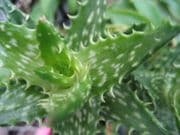
Aloe species
Aloe species has star shaped rosettes with tubular red, yellow or orange flowers on tall spikes. Provide bright light or full sun. Hardy to 36F.
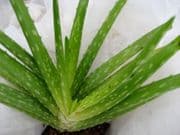
Aloe Vera
One of the more common aloe varieties, known for its healing properties. This plant does well indoors, in full sun to partial shade. Blooms yellow flowers in the summer. Hardy to 25°F, dont overwater.
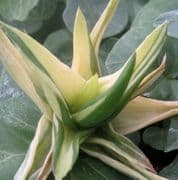
Aloe walmsley's bronze variegated
This variegated aloe has yellow/cream like colored stripes running up the green leaves. Leaves change bronze in heavier light or remain more green in shade. Like all succulents be careful not to over water.
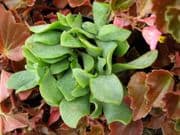
Crassula arborescens undulatifolia 'Ripple Jade'
Slower growing, the leaves of this Crassula are wavy and it can grow to about a foot tall. Easy to care for, it is drought tolerant and is hardy to zone 9.
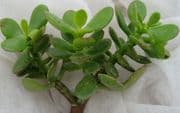
Crassula argentea compacta
This miniature version of the common Jade plant requires very little maintenance. It grows best under full sun and produces pink star shaped flowers in the fall and spring. Hardy to zone 10.
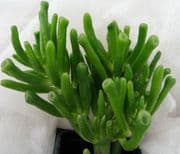
Crassula argentea E.T.s Fingers
Also known by its nickname Gollum Jade, this plant has characterstic tubular leaves with thick trunks. It blooms whitish pink star-shaped flowers in the early winter. Hardy to zone 9.
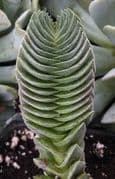
Crassula Buddha's Temple
This Crassula's leaves grow upward forming tight columns and are grayish-green in color. This would make a very interesting houseplant to have. Be careful not to over water.
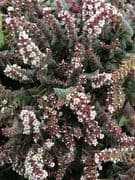
Crassula capitella
Also known as the campfire plant for its green and red coloring, capitella also colors pinkish/purple sometimes. Also often mistaken for Red Pagoda, but has larger leaves. Hardy to zones 9,10 and 11.
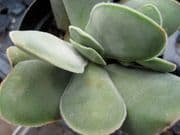
Crassula dubia
This shrublike succulent, native to South Africa, can be easily grown in full to part sun. Very drought tolerant but in climates with steady hot sun, water regularly. Blooms small white flowers in summer. Hardy to zone 9.
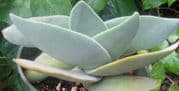
Crassula falcata
Native to South Africa, this Crassula's foliage is grey/green with a furry like texture. Also referred to as the airplane plant. This plant flowers red and most commonly in the summertime.
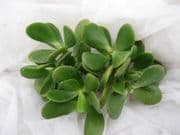
Crassula 'Jade'
Crassula ovata, the common Jade Plant, is native to South Africa. This tree-like plant is easy to grow in full or part sun with good drainage, but flowers best under the sun. Blooms pink flowers in winter to spring. Hardy to zone 10.
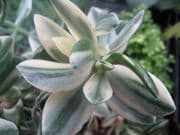
Crassula Jade variegated
This Crassula is the Jade plant with cream and green variegated leaves. Hardy to zones 10 and 11. Flowering time is during the winter and fall months.
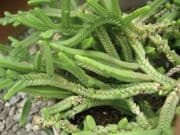
Crassula lycopodioides 'Watch Chain'
Crassula lycopodioides Watch Chain is a drought tolerant succulent, and is also hardy to 20F. It has an interesting growth pattern, looking like something that should be in the ocean. It grows best in a well draining soil, and the soil should not be wet if it is exposed to cold.
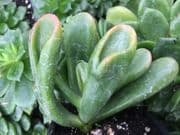
Crassula ovata gollum
This Crassula is similar in shape to the Crassula "E.t.'s Fingers." It's green tube like leaves have red tint throughout, and tend to flower in late fall/early winter. Can be planted in full sun to bright shade. Be careful not to over water.
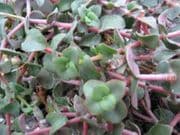
crassula pellucida purple
Crassula pellucida grows easily in direct sun and part shade. It has a high drought tolerance, and doesnt need much water. In the spring it blooms white star-shaped flowers. The leaves of this crassula are green, but red signifies new growth. It is hardy to zone 9.
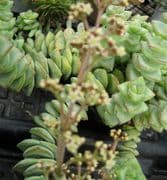
Crassula perforata 'String of Buttons'
Also known by its nickname, Necklace Vine, this hardy succulent grows well under cool sun or part shade and very minimal watering. Blooms pale yellow flowers in the spring, and will flower more under brighter light. Hardy to zone 9.
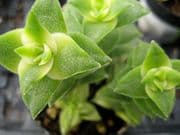
Crassula perforata variegata
Native to South Africa, this plant grows fairly fast. In the spring, it blooms small pale yellow flowers. Grows best in full sun to part shade with well draining soil. Hardy to zones 9-11.
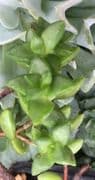
Crassula rupestris
This Crassula's leaves grow in tight square like shapes off the stems, would make a good outdoor plant, house plant of even grow nicely in hanging baskets. Can be planted in partial shade-full sun. Be careful not to over water.
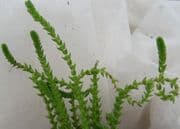
Crassula species muscosa
Crassula species muscosa is a nice decorative plant with green textured stems. When colder than usual, dont water as much as the roots are subjected to rot when wet for long period of time. hardy to zone 9.
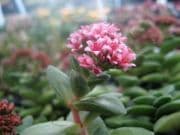
Crassula 'Springtime'
Crassula 'Springtime' has plump leaves that form a pagoda like shape. Pale pink flowers with dark centers. Provide bright light and porous soil. Hardy to 32F.
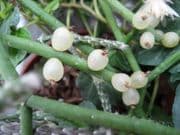
Rhipsalis baccifera
Nicknamed the mistletoe cactus, this plant is epiphytic with long stems that trail down. Grow in light shade to full shade and water freely. Hardy to zone 10.
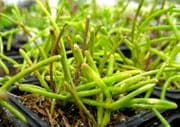
Rhipsalis capilliformis
Also known by the name old mans beard, this Rhipsalis has noticeably thinner cylindrical stems than others of its genus. Grows well in part shade and full shade. Hardy to zone 10.
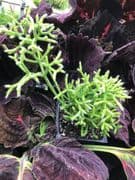
Rhipsalis cereuscula
Rhipsalis cereuscula is a shrubby to bushy succulent epiphyte, to 60 cm long, sometimes referred as 'rice cactus' or 'coral cactus'. It is easily recognizable due to an altitude of tiny, cylindrical stems that are borne at the ends of long slender branches.
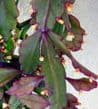
Rhipsalis crispata
Rhipsalis crispata is a Brazilian epiphyte with many small white flowers. It makes the most care free hanging basket if given light and not overwatered.

Rhipsalis houlletiana
Rhipsalis houlletiana is a cactus native to South America. Also known as the Snowdrop Cactus, for its small cream colored blooms. This cactus does not enjoy bright sunlight so filtered light is best for healthy growth.
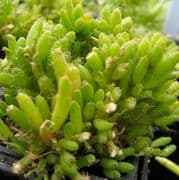
Rhipsalis mesembryanthemoides
Mesembryanthemoides is the only rhipsalis with tightly packed small branches. Water regularly and give shade. Hardy to zone 10.
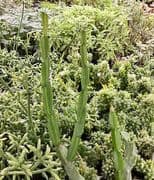
Rhipsalis Paradoxa
Rhipsalis Paradoxa has chained succulent leaves. Grows in long drapes over a planter and makes a unique hanging basket.
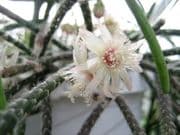
Rhipsalis pilocarpa
Naturally an epiphyte, the stems of pilocarpa are covered in tiny hairs and is unique of its kind. It blooms beautiful white flowers that have a pinkish tinge in sunlight.
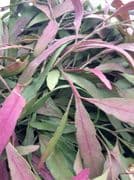
Rhipsalis ramulosa
Rhipsalis ramulosa is a South American epiphyte with many small white flowers. They are followed by pretty berries. It makes the most care-free hanging basket if given light and not overwatered.
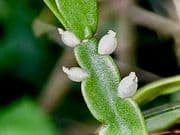
Rhipsalis rauhiorum
Rhipsalis rauhiorum is a rare epiphyte, native to a small portion of Ecuador. this cactus has small attractive white flowers on a narrow flat leaf. Best grown in dry soil, with bright indirect sunlight.
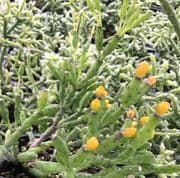
Rhipsalis Salicornoides
Rhipsalis Salicornoides succulent grows erect in slender leaves and blooms small yellow-orange flowers.
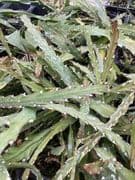
Rhipsalis Species Unknown
Rhipsalis Species Unknown is a spreading cacti best grown in dry soil with bright, indirect sunlight.
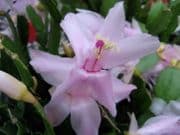
Schlumbergera 'Angel Wings'
The light pink flower of this Christmas Cactus appears from fall through winter. It is hardy to zone 9, therefore should be kept inside as a houseplant.
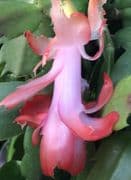
Schlumbergera Beach Dancer
Blooming a pink color come winter, this houseplant is easy to care for. Just set it in an area with bright indirect light and water when the soil is dry. Water less in fall to encourage blooms.
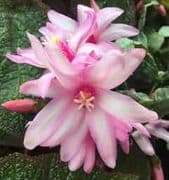
Schlumbergera Blush Pink
The multi-layered petals display a beautiful deep pink on the outside and gradually change to a gentle pastel pink on the interior. Like most holiday cactus, this plant will produce multiple blooms from late fall through spring. In northern climates it should be kept indoors.
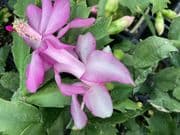
Schlumbergera 'Cherry Parfait'
'Cherry Parfait' has light purple flowers that deepen towrds the petals' edge.
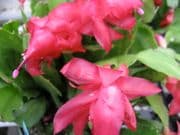
Schlumbergera 'Christmas Candy'
This Holiday Cactus has blooms of bright pink. They appear intermittently in fall threw spring. Be careful no to overwater.
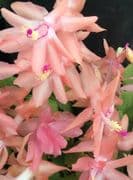
Schlumbergera Christmas Fantasy
This holiday cactus has peach/salmon flowers that arrive intermittently from fall to spring. Be careful not to overwater.
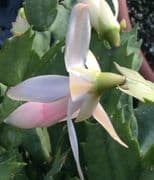
Schlumbergera Creamsicle
Holiday cactus Creamsicle has pale peach flowers intermittently from fall to spring. Be careful not to overwater.
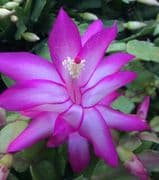
Schlumbergera Cristen
Blooming a gorgeous deep purple color come winter, this houseplant is among many that are easy to care for. Just set in an area with bright indirect light and water when the soil is dry.

Schlumbergera Dark Marie
Dark Marie is called a Christmas cactus because of its bloom time in the winter. Dark Marie, has bright pink blooms with a white center. It would rather be kept on the dry side because when the soil is wet, it tends to rot.
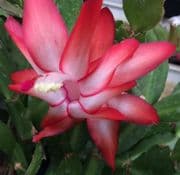
Schlumbergera Exotic Dancer
Exotic Dancer is known as a Christmas cactus, because of its bloomtime in the winter.'Exotic Dancer', has dark pink blooms with a hint of light pink. It grows fairly quickly and would rather be kept on the dry side, because in colder conditions when the soil is wet, it tends to rot.
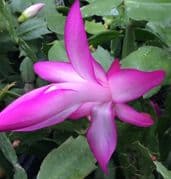
Schlumbergera Jolly Dancer
This plant is known as a Christmas cactus because of its bloomtime in the winter.'Jolly Dancer', has pinkish purple blooms with a hint of light pink. It grows fairly quicvkly and would rather be kept on the dry side.
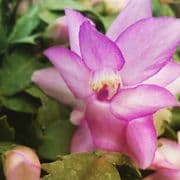
Schlumbergera 'Lavender Best'
Blooming a pinkish lavender color in winter this houseplant is easy to care for. Place in an area with bright indirect light and water when the soil is dry.
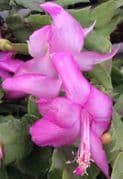
Schlumbergera Lavender Doll
Known as a Christmas cactus because of its bloomtime in the winter 'Lavender Doll', has pinkish lavender blooms with a hint of light pink. It would rather be kept on the dry side.
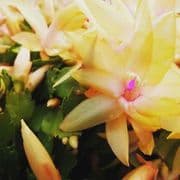
Schlumbergera 'Limelight'
The soft yellow bloom of this Christmas Cactus is a favorite.It has a bloomtime from fall to spring.
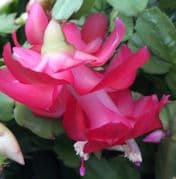
Schlumbergera Madsoline
This plant is known as a Christmas cactus because of its bloomtime in the winter. 'Madsoline' has deep pink blooms. It grows fairly quickly and would rather be kept on the dry side because in colder conditions when the soil is wet it tends to rot.
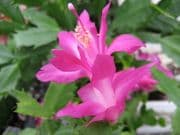
Schlumbergera 'New Years Shocker'
Come New Years, the startling pink flower of this Christmas Cactus will be in full bloom.
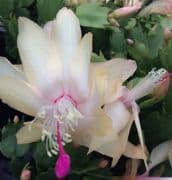
Schlumbergera New Yellow
This plant is known as a Christmas cactus because of its bloomtime in the winter 'New Yellow' has light yellow blooms. It grows fairly quickly and would rather be kept dry.
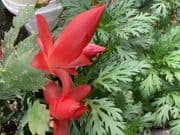
Schlumbergera 'Orange'
Schlumbergera 'Orange' features orange petals that deepen further from the base.
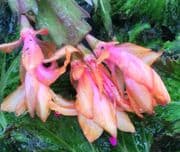
Schlumbergera Orange Sunset
Known as a Christmas cactus, because of its bloom time in the winter, 'Orange Sunset', has orange blooms with a hint of pink. It grows fairly quickly and would rather be kept on the dry side, because in colder conditions when the soil is wet, it tends to rot.
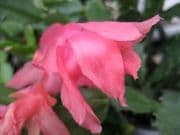
Schlumbergera 'Peach Parfait'
The peachy pink flower of this Christmas Cactus will show its colors in the winter and will only get better each year.
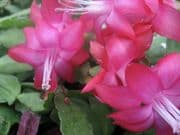
Schlumbergera 'Pink and Red'
Known as a Christmas cactus, because of its bloomtime in the winter, 'Pink and Red', has raspberry red blooms with a hint of pink. It grows fairly quickly and would rather be kept on the dry side, because in colder conditions when the soil is wet, it tends to rot.
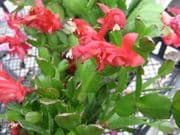
Schlumbergera 'Scarlet Ribbon'
Scarlet blooms will appear from this Christmas Cactus, which remains a favorite among cactus lovers.
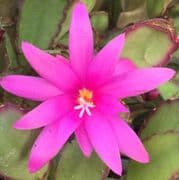
Schlumbergera Shocking Spring Rose
Known as a Christmas cactus, because of its bloomtime in the winter, 'Shocking Spring Rose, has bright purple blooms with a pink center. It grows fairly quickly and would rather be kept on the dry side, because in colder conditions when the soil is wet, it tends to rot.
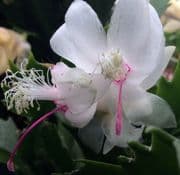
Schlumbergera Snow White
Known as a Christmas cactus, because of its bloomtime in the winter, 'Snow White', has white blooms. It grows fairly quickly and would rather be kept on the dry side, because in colder conditions when the soil is wet, it tends to rot.
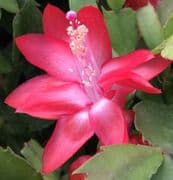
Schlumbergera Sunburst
Known as a Christmas cactus, because of its bloomtime in the winter, 'Sunburst', has deep pink blooms. It grows fairly quickly and would rather be kept on the dry side, because in colder conditions when the soil is wet, it tends to rot.
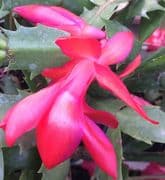
Schlumbergera Thor Carmen
Known as a Christmas cactus, because of its bloomtime in the winter, 'Thor Carmen', has dark pink blooms. It grows fairly quickly and would rather be kept on the dry side, because in colder conditions when the soil is wet, it tends to rot.
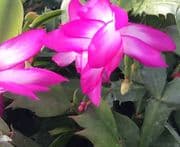
Schlumbergera Thor Ritt
Schlumbergera Thor Ritt is a Holiday Cactus. This type of plant flowers after certain triggers are meet; as cool nights, short days and less moisture. One way this is easily done is by putting the plant in an unused room in the fall. They are very easy to grow and very pretty, This plant has striking bright pink flowers. NEW ITEM 2015
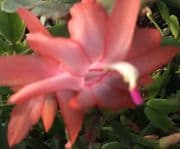
Schlumbergera Thor VDA
Known as a Christmas cactus, because of its bloomtime in the winter, 'Thor VDA', has orange blooms. It grows fairly quickly and would rather be kept on the dry side, because in colder conditions when the soil is wet, it tends to rot.
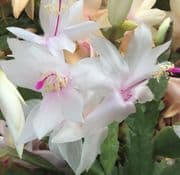
Schlumbergera White
Known as a Christmas cactus, because of its bloomtime in the winter, 'White', has white blooms with a pink center. It grows fairly quickly and would rather be kept on the dry side, because in colder conditions when the soil is wet, it tends to rot.
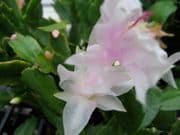
Schlumbergera 'White Christmas'
Blooming into Christmas time, it's the perfect gift for cactus lovers, or simply just someone who appreciates a beautiful bloom.
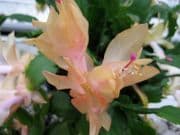
Schlumbergera 'Yellow'
With a distinct bloom that sets it apart from other Christmas Cactus the soft yellow flower is a favorite at the greenhouse.
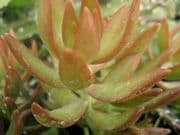
Sedum adolphii 'Firestorm'
Native to South Africa. The orange-red succulent leaf tips of 'Firestorm' make it a standout amongst others. The leaves become a more distinct 'fire' color when grown under full sun. It is hardy to zone 9.
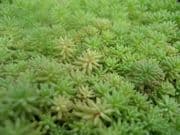
Sedum 'Blue Ball'
A quick growing blueish green sedum that forms a dense mat, Sedum 'Blue Ball' is hardy to zone 5 and makes a great easy to care for decoration.
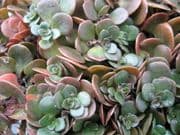
Sedum Coral Reef
Coral Reef has shiny green leaves with bronze tips. It forms a dense mat cover with yellow flowers. Drought tolerant, and provide porous soil. Hardy to zone 5.
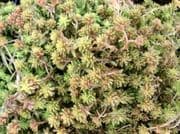
Sedum Fine Gold Leaf
A great groundcover decoration, Sedum Fine Gold Leaf forms a dense mat and should be kept away from full sun. It is hardy to zone 5.
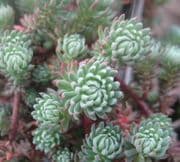
Sedum forsterianum 'Antique Grill'
Sedum forsterianum 'Antique Grill' has blue/grey needles that sometimes turn dark red in cool weather. This plant blossoms yellow flowers.
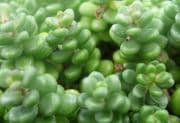
Sedum green ball
Sedum green ball has light green, round foliage. Similar to the cactus, sedums do not need water often and are easy to care for.
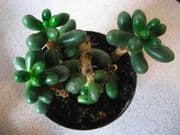
Sedum hernandezii
Sedum hernandezii has clusters of stems up to 4 inches in height. The oval leaves have a cracked appearance and it blooms large star shaped flowers. Provide bright light and porous soil. Hardy to 32F./Zone 5. Native to Puebla, Mexico.
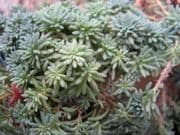
Sedum hispanicum 'Blue Carpet'
Sedum hispanicum 'Blue Carpet' has petite silvery blue foliage with pinkish white flowers. Makes a great ground cover. Hardy to zone 5.
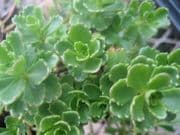
Sedum 'Immergrunchen'
With green foliage and yellow blooms, this sedum makes a great accent. It is hardy to zone 5.
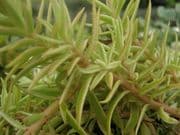
Sedum lineare
Very easy to grow, Sedum lineare blooms beautiful yellow flowers in the summer and loves the full sun. It is an evergreen stonecrop that forms a mat as it grows. It is hardy to zone 6.
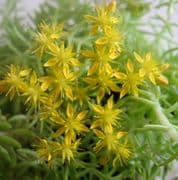
sedum makinoi Ogon
sedum makinoi Ogon has light green foliage. Blossom bright yellow flowers. Similar to the cactus sedums do not need water often and are easy to care for.
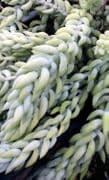
Sedum morganianum 'Burro's Tail'
Native to southern Mexico and Honduras, the growth of morganianum resembles a burro's tail. Teal in color, hardy to zones 10b and 11.
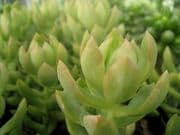
Sedum nussbaumerianum
Native to Mexico, this drought tolerant succulent loves the full sun and will grow to a little less than a foot tall but can reach up to 3 feet wide. It is hardy to zone 9.
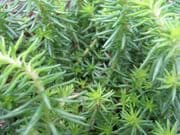
Sedum rupestre Angelina
Sedum rupestre Angelina has greem foliage that changes to amber in fall. Hardy to zone 5.
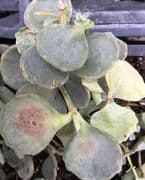
Sedum sieboldi
Sedum sieboldi has blue/green foliage; cold weather brings out pink in the foliage. Blossoms pink/purple flowers. Similar to cactus, sedums do not need water often and are easy to care for.
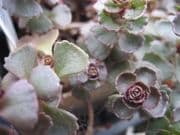
Sedum spurium
This rock loving perennial prefers full sun, but can still grow well in the shade. Blooming red flowers in the summer, it is hardy to zone 4.
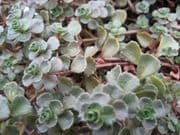
Sedum spurium 'Dragon's Blood'
Sedum spurium 'Dragon's Blood' has bronze-red foliage with rose-red flowers. Makes a great ground cover. Hardy to zone 5.
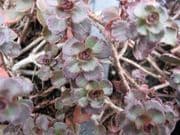
Sedum spurium fuldaglut
Sedum spurium fuldaglut has dark red foliage with red flowers. Hardy to zone 5.

Sedum Stone Crop
Sedum Stone Crop is a hardy plant that needs lots of sun. Stone Crop has beautiful stripes of yellow and green on a flower-like plant.